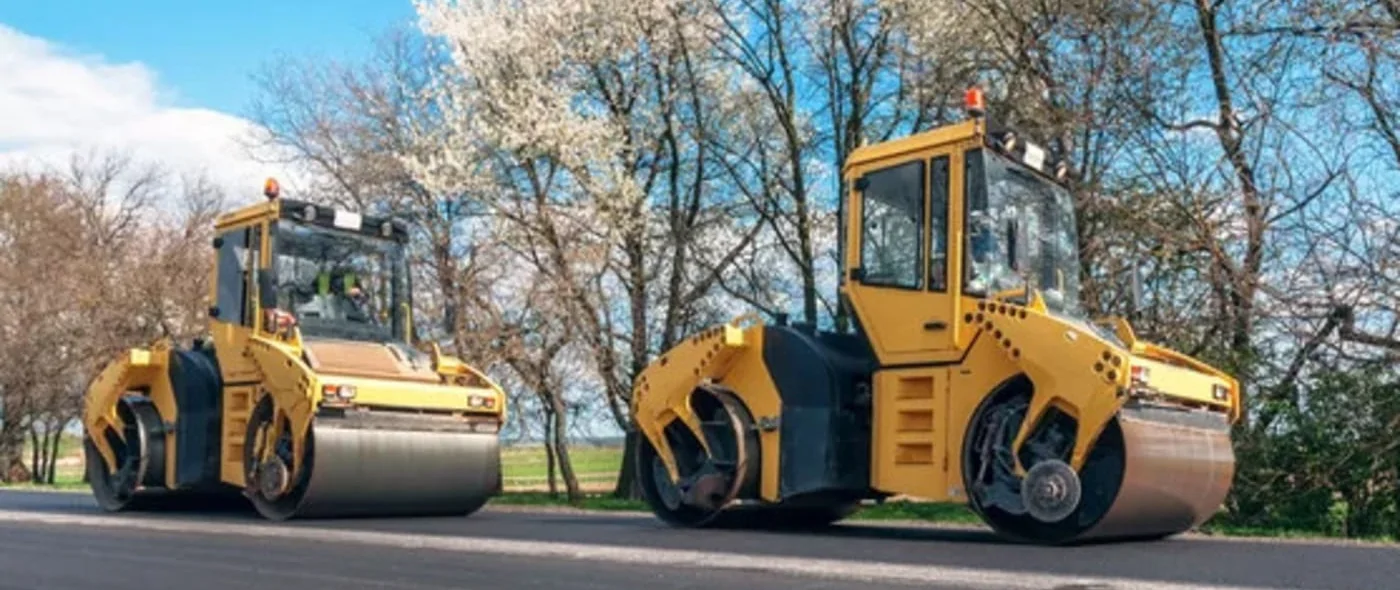

A road roller is not just a heavy vehicle that flattens soil. It is the machine that sets the conditions for a pavement’s entire life cycle. Good compaction transforms loose aggregate into an interlocked mass that resists deformation and distributes loads safely to the layers beneath. Put simply: if compaction is done well at the outset, maintenance needs fall and service life rises.
Why compaction matters
At the core of every durable pavement is the control of voids and moisture. Compaction reduces the air voids within granular materials so that particles bear load through friction rather than shifting under traffic. When air voids are too high, the pavement is vulnerable to raveling. Moisture can penetrate and lead to potholing.
Practical techniques that extend pavement life
Achieving long-term performance is a discipline of choices: layer thickness, moisture control, rolling pattern, and timing. Best practice includes compacting in lifts (thin layers) so each pass influences the full thickness of that lift, using the correct number of roller passes, and following a rolling pattern that overlaps passes to avoid uncompacted seams. For asphalt, temperature control is critical: starting the compaction at too-low a mat temperature prevents particle interlock and bond formation, while starting too late results in early cooling and incomplete densification. Modern approaches—such as reflective pre-rolling of base layers and controlling the travel speed and vibration settings of rollers—produce far more uniform compaction than ad hoc methods.
The role of measurement and intelligent compaction
You cannot manage what you do not measure. Field acceptance testing—nuclear density gauge readings, non-nuclear density methods and plate bearing tests—gives objective confirmation that target density and moisture content have been achieved. These tests guide the number of passes and identify weak areas that need corrective work before the next layer or surface is placed. Intelligent compaction (IC) systems now integrate sensors and mapping to show compaction uniformity in real time; contractors using IC reduce the risk of localized weak spots and can document compaction history for handover. Together, measurement and machine feedback reduce uncertainty and avoid the costly rework that shortens pavement life.
Common mistakes that shorten pavement life—and how to avoid them
A lot of mistakes can cut down the life of a road — things like rolling when the asphalt isn’t at the right temperature or not overlapping enough during compaction. But it’s not just the roller that matters; the way the site is managed makes a big difference too. This is where a forklift actually becomes really useful. When materials are unloaded on time the whole process flows better. The mix doesn’t cool down too much which makes the rollers do their job properly. In short, good handling with a forklift keeps the project on track and helps the finished road last longer.
Environmental and lifecycle benefits
High-quality initial compaction reduces the need for maintenance interventions, This cuts material use, traffic disruption and carbon emissions over a pavement’s life. Techniques such as roller-compacted concrete (RCC) can further reduce the environmental footprint of roadworks. Where possible, including compaction targets in project specifications and monitoring compliance helps deliver the sustainability benefits engineers expect.
Conclusion
At the end of the day, a road is only as strong as the work that went into building it. When compaction is done properly, the surface holds up better and saves everyone the hassle of constant repairs. It’s not just about the roller, but also about how the whole site is managed. Just as a boom lift helps workers reach tricky spots safely, a road roller lays the foundation for roads that last. With the right equipment, the results speak for themselves.