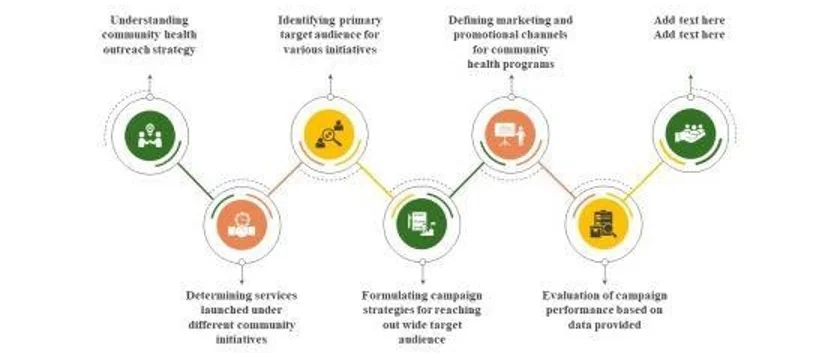

A successful outreach campaign is one of the most effective ways to build brand awareness, earn high-quality backlinks, generate leads, and establish valuable industry relationships. However, in an era where AI can generate thousands of generic emails per minute, success requires moving past basic templates. Winning in modern outreach demands precise data, deep personalization, and strict workflow execution.
1. Define Clear Goals with Benchmarks
Before launching, determine your core objective. Your goal dictates your target metrics, your prospecting criteria, and your value proposition. Use these industry-standard conversion benchmarks to calibrate your expectations:
Outreach Goal | Primary Metric | Target Conversion Benchmark |
|---|---|---|
Link Building (Skyscraper/Guest Post) | Placement Rate | 3% – 5% of total pitched prospects |
Digital PR / Journalist Pitching | Coverage Rate | 1% – 3% (Highly dependent on news hooks) |
B2B Lead Generation | Positive Reply Rate | 8% – 15% of total reached prospects |
2. Quantitative Prospecting & List Building
An outreach campaign is only as good as its data integrity. Instead of broad Google searches, utilize specialized tools to build a validated prospect list based on hard metrics.
[Prospecting Workflow]
Filter by DR/Traffic (Ahrefs) ➔ Extract Contacts (Hunter.io) ➔ Verify Emails (NeverBounce)
The Selection Criteria
- Domain Rating (DR) / Domain Authority (DA): Target sites with a DR between 40 and 70 for competitive yet attainable link acquisition.
- Organic Traffic Trends: Ensure the site has at least 5,000 monthly organic visitors (via SEMrush or Ahrefs) to confirm it hasn't been penalized by recent search engine algorithm updates.
- Data Hygiene: Run every extracted email through a verification tool like NeverBounce or ZeroBounce. Keep your bounce rate strictly under 2% to protect your domain's sending reputation.
3. Crafting a Hyper-Personalized Value Proposition
Generic emails are automatically filtered into spam folders. To get an email opened and answered, you must offer an immediate, asymmetrical value proposition where the recipient gains more than you do.
The Breakdown of a High-Converting Pitch
Study this breakdown of a successful link-building outreach email based on a real-world scenario:
Subject: Quick suggestion for your [Topic] guide, [First Name]
Hi [First Name],
I was digging into your guide on [Specific Article Title] and loved your breakdown of [Specific sub-topic from their article]. Specifically, your point about [Insert unique insight from article] is something most people completely miss.
I noticed you referenced [Competitor/Outdated Resource] from 2021. Since that was published, [Insert industry shift, e.g., Google updated its core helpful content guidelines].
We recently published a completely updated, interactive breakdown on this exact trend, including [Mention unique data point or asset you own, e.g., data from 5,000 campaigns].
If you think it would add value for your readers, here is the link: [URL]. Either way, keep up the killer work on the blog!
Cheers,
[Your Name]
[Your Title/Company]
Why this works: It proves you actually read their content within the first two sentences, identifies a legitimate gap in their existing asset (outdated data), offers an immediate fix without demanding anything in return, and ends with a low-friction call to action.
4. The Strategic Follow-Up Sequence
According to a comprehensive study by Backlinko analyzing over 12 million outreach emails, sending just one follow-up can boost overall response rates by 65.8%. However, your cadence must be precise to avoid being marked as spam.
1.Day 1: The Initial Pitch: Sent at 8:30 AM recipient's local time.
Deliver the personalized core pitch. Avoid attachments or excessive links, which can trigger strict corporate spam filters.
2.Day 4: The Value Add:3 days later.
Send a polite, threaded reply. Do not say "Just checking in." Instead, offer a new piece of value, such as a relevant industry statistic or a recent social media share you gave their brand.
3. Day 9: The Breakup Email: 5 days after Step 2.
The final attempt. Explicitly state that you won't crowd their inbox anymore, ask one simple closing question, and leave the door open for future collaboration.
5. Tracking, Analytics, and Scale
To properly optimize your campaigns, maintain a centralized dashboard using platform-native tools (like HubSpot, Lemlist, or Woodpecker). Monitor your analytics at every stage of the funnel:
$$\text{Open Rate} \rightarrow \text{Reply Rate} \rightarrow \text{Positive Conversion Rate}$$
If your Open Rate is below 40%, your subject lines are weak or your domain has deliverability issues. If your Reply Rate is below 8%, your personalization is lacking or your value proposition isn't compelling enough to the target audience. Focus on adjusting one variable at a time to systematically scale your results.