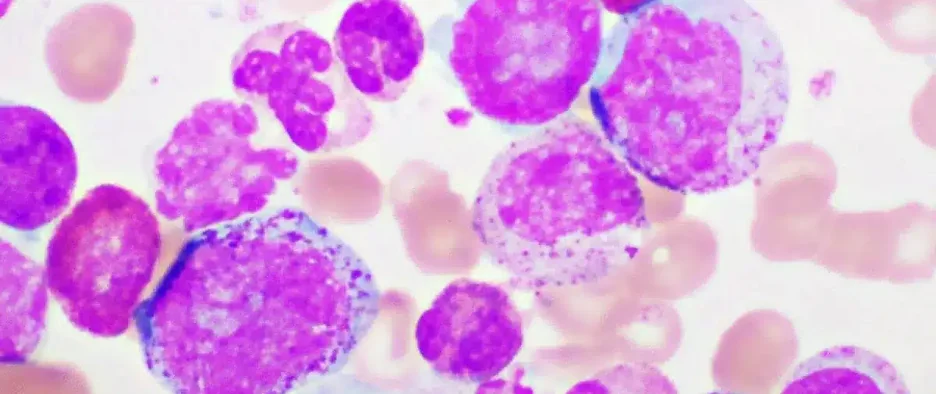

Myelogenous leukemia, also called myeloid leukemia, is a cancer that begins in the bone marrow, the spongy tissue inside bones where blood cells are made. This condition, often discussed under the broader term Stem Cell Myelogenous Leukemia because of how closely it is tied to the bone marrow's stem cell production system, requires understanding the role stem cells play in normal blood production, and how things go wrong when leukemia develops.
What Are Stem Cells?
Stem cells are the body's raw material, unspecialized cells capable of developing into many different cell types. In the bone marrow, hematopoietic stem cells are responsible for producing all the blood cells the body needs: red blood cells that carry oxygen, white blood cells that fight infection, and platelets that help blood clot.
These stem cells follow a carefully regulated maturation process. A single hematopoietic stem cell can divide and differentiate along different pathways, eventually becoming a fully mature, functional blood cell. One major branch of this process is the myeloid lineage, which gives rise to red blood cells, platelets, and several types of white blood cells, including granulocytes and monocytes. When this myeloid lineage malfunctions at the stem cell level, the resulting disease is what clinicians and researchers describe as Stem Cell Myelogenous Leukemia.
How Myelogenous Leukemia Develops
Myelogenous leukemia occurs when something disrupts the normal development of myeloid stem cells. Instead of maturing properly, these cells undergo genetic mutations that cause them to grow and divide uncontrollably. The result is an overproduction of abnormal, immature white blood cells called blasts, which crowd out healthy blood cells in the bone marrow. This breakdown at the source of blood cell formation is precisely why Stem Cell Myelogenous Leukemia is treated as a disease of the marrow's production system, not merely a disorder of mature blood cells.
There are two primary forms of this disease:
Acute Myelogenous Leukemia (AML) progresses rapidly. Immature blast cells multiply quickly and fail to develop into functioning blood cells, leading to a swift decline in healthy blood cell counts. AML requires prompt treatment and is most common in older adults, though it can occur at any age.
Chronic Myelogenous Leukemia (CML) progresses more slowly. It is strongly associated with a genetic abnormality known as the Philadelphia chromosome, a translocation between chromosomes 9 and 22 that creates an abnormal fusion gene called BCR-ABL1. This fusion gene produces a protein that drives uncontrolled cell growth. CML often develops gradually and may be detected incidentally through routine blood work before symptoms appear.
Common Symptoms
Because leukemia interferes with the production of healthy blood cells, symptoms often relate to deficiencies in red blood cells, white blood cells, or platelets. These can include persistent fatigue and weakness, frequent infections, easy bruising or bleeding, bone or joint pain, unexplained weight loss, and fever or night sweats. Symptoms tend to appear suddenly in acute forms and develop more gradually in chronic forms.
Diagnosis
Diagnosing myelogenous leukemia typically involves a combination of blood tests and bone marrow examination. A complete blood count can reveal abnormal levels of white cells, red cells, and platelets. A bone marrow biopsy allows doctors to examine the marrow directly and identify the proportion of blast cells present. Genetic and molecular testing, including screening for the Philadelphia chromosome and other mutations, helps classify the specific subtype of leukemia and guides treatment decisions.
Treatment Approaches
Treatment varies considerably depending on whether the leukemia is acute or chronic, as well as the patient's age, overall health, and specific genetic markers.
For AML, treatment usually begins with intensive chemotherapy aimed at inducing remission, followed by additional therapy to eliminate any remaining leukemic cells. In many cases, a stem cell transplant, also called a bone marrow transplant, is recommended. This procedure replaces diseased bone marrow with healthy stem cells, either from a donor or, less commonly, from the patient's own previously collected cells. A successful transplant can restore normal blood cell production and, in some cases, offer a long-term cure.
For CML, the discovery of the BCR-ABL1 fusion gene led to the development of targeted therapies called tyrosine kinase inhibitors. These medications block the abnormal protein driving the disease and have transformed CML from a often-fatal condition into one that many patients manage successfully for years with daily oral medication. Stem cell transplants remain an option for patients who do not respond well to these targeted drugs or whose disease progresses to a more aggressive phase.
The Role of Stem Cell Transplants
A stem cell transplant aims to replace a patient's cancerous or damaged bone marrow with healthy stem cells capable of producing normal blood cells. For patients facing Stem Cell Myelogenous Leukemia, this procedure represents one of the most direct ways to address the disease at its root, since it replaces the very source of the malfunctioning cells rather than simply targeting the abnormal cells already in circulation. There are two main types: autologous transplants, which use the patient's own stem cells collected before treatment, and allogeneic transplants, which use stem cells from a matched donor, often a sibling or registered volunteer.
Allogeneic transplants carry an added benefit in some leukemias known as the graft-versus-leukemia effect, in which the donor's immune cells help recognize and destroy any remaining cancer cells. This effect can improve long-term outcomes but also carries risks, including graft-versus-host disease, where the donor's immune cells attack the recipient's healthy tissue.
Looking Ahead
Research into myelogenous leukemia continues to advance rapidly. Scientists are studying new targeted therapies, improving methods for matching transplant donors, and exploring ways to make treatment less toxic for patients. Advances in genetic testing also allow for more personalized treatment plans, tailored to the specific mutations present in an individual's cancer.
Understanding the connection between normal stem cell function and the development of myelogenous leukemia underscores why this disease, properly understood as Stem Cell Myelogenous Leukemia, responds so well to stem cell-based treatments. By replacing damaged or cancerous marrow with healthy stem cells, doctors can, in many cases, restore the body's ability to produce normal, healthy blood.
This article is intended for general informational purposes and should not replace advice from a qualified healthcare provider. Anyone experiencing symptoms or seeking guidance on diagnosis or treatment should consult a medical professional.