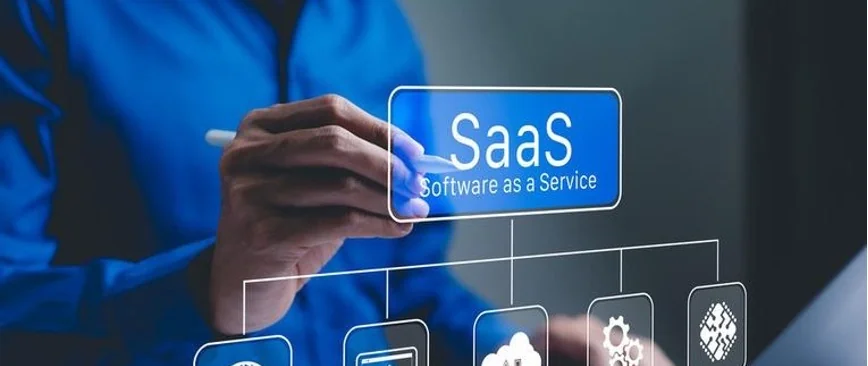

In today's fast-paced digital economy, organizations face intense pressure to optimize workflows, mitigate capital expenditures (CapEx), and accelerate time-to-market. Historically, deploying enterprise-grade technology required massive on-premises data centers, complex infrastructure architecture, and dedicated IT teams to manage lifecycle maintenance.
The widespread adoption of Software as a Service (SaaS) has fundamentally upended this paradigm. By shifting software delivery to a centrally hosted, cloud-native model, SaaS enables modern enterprises to replace rigid legacy systems with agile, highly integrable ecosystem architectures.
According to Gartner forecasts, worldwide end-user spending on public cloud services is projected to surpass $679 billion, with SaaS remaining the largest market segment. This growth underscores a broader strategic pivot: businesses are no longer treating software as a static asset, but as an operational utility designed to scale dynamically alongside enterprise demand.
What is Software as a Service?
Software as a Service (SaaS) is a software licensing and delivery model in which applications are centrally hosted by a third-party vendor on cloud infrastructure and distributed to end-users via the internet, typically through a web browser or a thin-client interface.
Architecturally, modern SaaS is built on a multi-tenant architecture. Unlike traditional software where each customer runs a distinct instance of an application on dedicated hardware, multi-tenancy enables a single, shared infrastructure and application instance to serve thousands of customers (tenants). Each tenant’s data is logically isolated and secured via advanced cryptographic partitioning, ensuring strict data privacy and compliance.
+-------------------------------------------------------------+
| Multi-Tenant SaaS App |
+-------------------------------------------------------------+
| [Tenant A Data] | [Tenant B Data] | [Tenant C] | <-- Logically Isolated
+-------------------------------------------------------------+
| Shared Compute / Infrastructure | <-- Shared Resource Pool
+-------------------------------------------------------------+
Prominent enterprise examples demonstrate how this model spans critical business verticals:
- Customer Relationship Management (CRM): Salesforce utilizes a multi-tenant cloud to give global sales forces real-time pipeline visibility and predictive analytics.
- Enterprise Resource Planning (ERP): NetSuite unifies financial management, billing, and inventory into a single cloud ledger, mitigating data silos.
- Collaboration & Productivity: Microsoft 365 and Slack use continuous-delivery pipelines to push real-time collaboration features to millions of active endpoints daily.
Strategic Benefits of Enterprise SaaS Deployment
1. Financial Optimization: Shifting CapEx to OpEx
Traditional software rollouts require severe upfront capital expenditures (CapEx)—encompassing hardware procurement, perpetual software licensing, and specialized implementation consultants. SaaS restructures these economics into predictable, subscription-based operational expenditures (OpEx).
By utilizing per-user, tiered, or consumption-based pricing models, enterprises align software costs directly with actual utilization. Furthermore, the Total Cost of Ownership (TCO) is drastically reduced, as the financial burdens of server depreciation, hardware lifecycle management, and disaster recovery infrastructure are transferred entirely to the vendor.
2. Elastic Scalability and API Integration
Enterprise growth requires technical elasticity. SaaS platforms allow organizations to scale seats, storage, and compute resources up or down instantaneously via a centralized admin console.
Crucially, modern SaaS platforms are built with an API-first methodology. Through robust RESTful and GraphQL APIs, companies can break down data silos and build highly integrated hybrid ecosystems. For instance, a marketing department can seamlessly pipe customer data from a HubSpot SaaS platform into a Snowflake data warehouse, and subsequently visualize it via Tableau—all without writing bespoke, brittle middleware code.
[ HubSpot SaaS ] ===( REST API )===> [ Snowflake Data Warehouse ] ===( REST API )===> [ Tableau Analytics ]
3. High Availability and Continuous Compliance
Leading SaaS vendors build their solutions on top of Tier-1 hyperscale cloud providers (such as AWS, Google Cloud Platform, or Microsoft Azure). This guarantees enterprise-grade infrastructure resiliency, typically backed by Service Level Agreements (SLAs) promising 99.9% to 99.99% uptime.
Moreover, managing compliance certifications—such as SOC 2 Type II, ISO 27001, GDPR, and HIPAA—is a shared responsibility. SaaS providers maintain these rigorous security postures at the infrastructure and application layers, relieving internal enterprise security teams of significant regulatory burdens.
4. Continuous Delivery and Automated Patch Management
The era of the disruptive "Big Bang" software upgrade is over. SaaS operates on a Continuous Integration and Continuous Deployment (CI/CD) pipeline. Software updates, bug fixes, and critical security patches are engineered and deployed server-side by the vendor. This occurs seamlessly behind the scenes, ensuring end-users always have access to the latest feature iterations without causing operational downtime or requiring manual IT intervention.
Navigating the Enterprise Transition to SaaS
While the benefits of SaaS are clear, sophisticated enterprises must evaluate specific operational parameters to ensure a successful deployment:
- SLA and Performance Verification: Organizations must carefully evaluate a vendor's SLA to confirm that remediation protocols and financial credits are sufficient in the event of an outage.
- Data Portability and Vendor Lock-in: Before committing to an ecosystem, enterprise architects should review the vendor's data extraction capabilities. Ensuring clean data egress via standard formats (e.g., JSON, CSV) prevents costly vendor lock-in.
- Identity and Access Management (IAM): To maintain a robust perimeter, enterprise SaaS applications must be integrated with centralized IAM tools (such as Okta or Azure AD) utilizing SAML 2.0 or OIDC protocols to enforce Single Sign-On (SSO) and Multi-Factor Authentication (MFA).
Conclusion
As digital transformation accelerates across global industries, Software as a Service has evolved from an alternative delivery model into the foundational architecture of the modern enterprise. By mitigating upfront infrastructure costs, ensuring continuous technical innovation, and offering unprecedented operational elasticity, SaaS empowers businesses to remain agile in an unpredictable market. Organizations that strategically integrate robust, secure, and highly interoperable SaaS solutions position themselves to optimize efficiency, drive collaborative output, and capture long-term competitive advantages in the digital era.